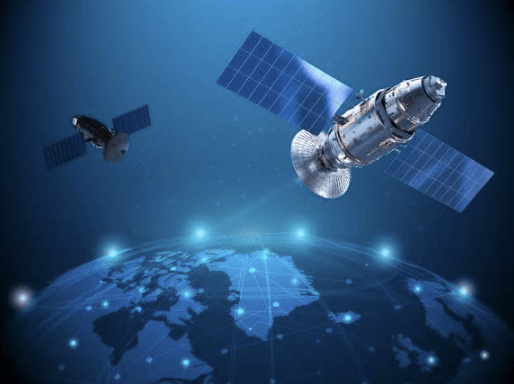
Artificial intelligence reshapes planetary research by integrating diverse data streams—from telescope images to mission telemetry—into coherent analyses. It detects subtle patterns, anomalies, and cross-wavelength correlations while supporting autonomous exploration under robust governance. Emphasis on provenance, bias mitigation, and explainability anchors reproducibility and safety. The approach must align with planetary protection and interdisciplinary scrutiny. However, tensions between model complexity, interpretability, and governance raise questions about trustworthy deployment as new results emerge.
How AI Accelerates Planetary Discovery
Artificial intelligence accelerates planetary discovery by systematically processing vast, heterogeneous datasets—from telescope images to spectroscopic measurements and mission telemetry—to identify subtle patterns, anomalies, and correlations that may elude human analysis.
The approach emphasizes AI ethics, data governance, and bias mitigation, aiming to improve modeling accuracy while enabling autonomous exploration, mindful of planetary protection and robust, transparent scientific inquiry.
How Data, Models, and Autonomy Drive Exploration
Data, models, and autonomy together shape exploratory pathways by enabling scalable interpretation of heterogeneous observations, rigorous testing of hypotheses, and efficient decision-making under uncertain conditions.
In planetary research, data governance structures ensure provenance, access, and quality control across disciplines.
Model explainability clarifies assumptions and limitations, fostering interdisciplinary scrutiny.
Autonomy accelerates hypothesis testing while preserving human oversight, sustaining rigorous inquiry and responsible exploration.
How AI Enables Habitable Worlds and Biosignature Clues
AI serves as a catalyst for identifying and characterizing habitable environments and potential biosignatures by integrating multi-wavelength observations, atmospheric modeling, and terrain context.
The approach supports rigorous habitable screening and structured biosignature interpretation across datasets, models, and missions.
Interdisciplinary scrutiny reveals robust constraints on habitability, guiding hypotheses while maintaining methodological transparency, reproducibility, and openness to diverse scientific perspectives and uncertainties.
How to Implement AI in Planetary Research Safely and Effectively
Implementing AI in planetary research requires a structured framework that foregrounds safety, reliability, and transparency. A disciplined approach integrates cross-disciplinary ethics, robust validation, and continuous monitoring. Clear ai governance ensures accountability, while model interpretability clarifies decisions for researchers and stakeholders. Methods emphasize reproducibility, data provenance, and risk assessment, enabling resilient deployments that advance exploration without compromising planetary protection or scientific integrity.
Frequently Asked Questions
How Do AI Misinterpret Rare Planetary Signals?
AI systems misinterpret rare planetary signals due to noisy data and model biases, leading to misleading signals and rare event misclassification; interdisciplinary scrutiny reveals data sparsity, calibration gaps, and confirmation biases shaping interpretation, hindering objective inference for an unconstrained audience.
Can AI Introduce Bias in Planetary Samples?
AI bias can emerge via Sampling representativeness and AI misinterpretation, risking Rare signal ambiguity. Data privacy, Long term safeguards, and Cross mission validation mitigate concerns. Human AI collaboration, Expertise replacement risks, and Result verification guide rigorous, interdisciplinary analysis toward freedom.
What Are the Long-Term Data Privacy Concerns?
Long-term data privacy concerns center on privacy leakage risks and data anonymization challenges; interdisciplinary analyses warn that even anonymized planetary data may reveal sensitive operational patterns, requiring rigorous governance, ongoing risk assessment, and adaptable ethical frameworks satisfying freedom-seeking audiences.
Will AI Replace Human Expertise Entirely?
AI will not entirely replace human expertise; instead, it augments it. The discussion emphasizes AI ethics and cross mission reproducibility, fostering rigorous, interdisciplinary analysis while preserving intellectual autonomy for researchers pursuing freedom in inquiry.
See also: newsming
How to Validate AI Results Across Missions?
A cautious approach validates AI results across missions, ensuring reproducibility and cross-sensor consistency. In one data point, a rover’s image analysis flagged a recurring pattern, prompting independent anomaly detection checks before firm conclusions.
Conclusion
Artificial intelligence amplifies planetary science by integrating heterogeneous data, rigorous models, and autonomous exploration under principled governance. By enhancing pattern recognition, uncertainty quantification, and decision transparency, AI accelerates hypothesis testing and bias mitigation while preserving planetary protection norms. The multidisciplinary synthesis—astronomy, geology, biology, ethics—yields robust habitability assessments and biosignature interpretation. In concert, explainability, reproducibility, and continuous monitoring cohere into a disciplined workflow, steering discovery like a compass in a quiet sea, ensuring accountable progress across the solar system and beyond.
